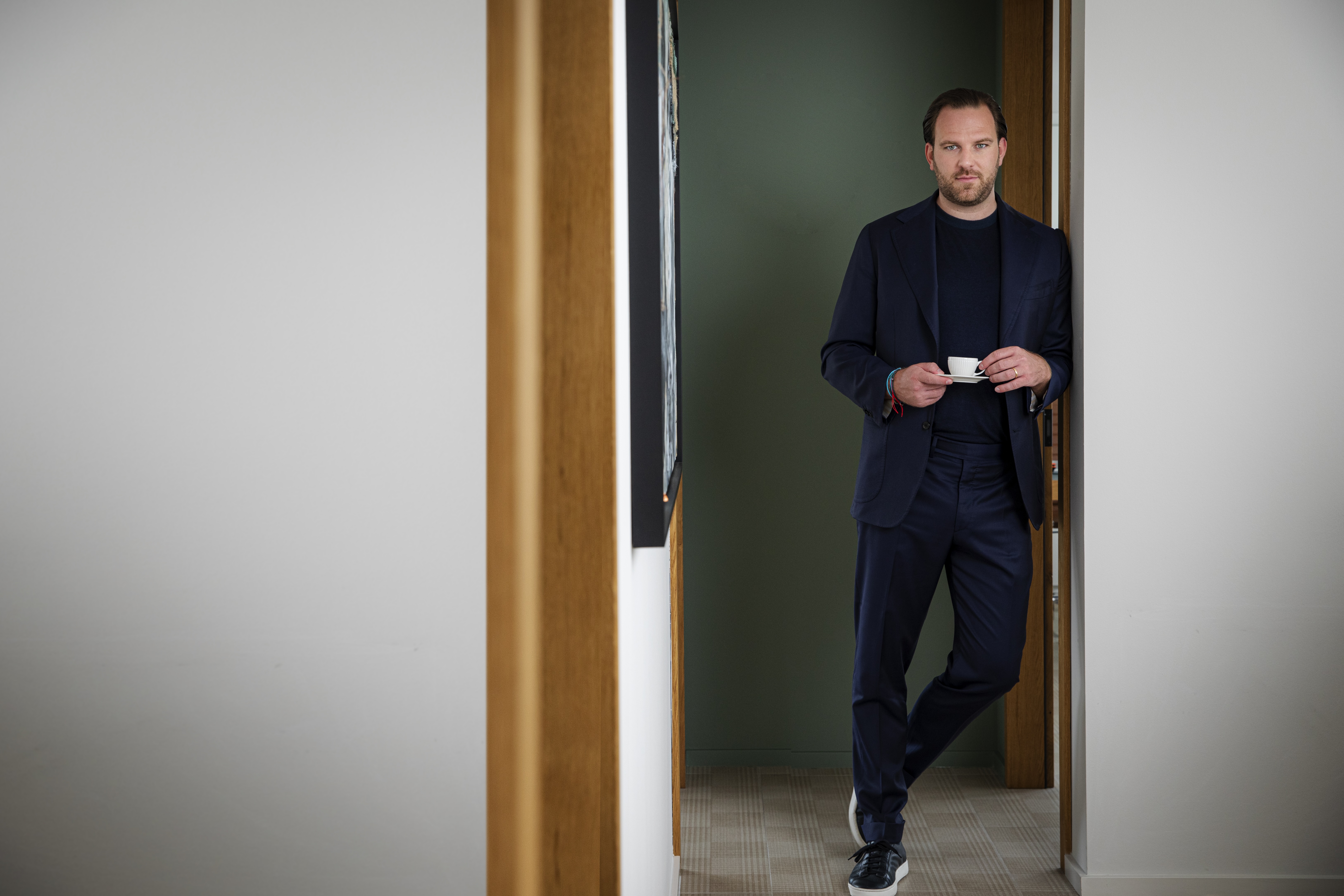

Seil is not a corporate heavyweight, but a niche adviser. Yet he is currently moving portfolios piece by piece that others can no longer sell in bulk. His approach: not to bundle, but to break up. Not to chase the big headline, but to focus on operational depth.
While large international brokerage houses are trying to place portfolios worth hundreds of millions, Seil is taking them apart – house by house, buyer by buyer. What is no longer financeable as a single package for institutional investors is transformed into units that the market can absorb. In the end, rather than offshore structures, the buyers are German private individuals, entrepreneurs and regional property holders. This is not a romantic return to the past, but a sober adjustment to the market.
‘Portfolio sales no longer work the way they did in 2015’, says Seil. ‘So you have to rethink the structure.’ It sounds almost banal. In practice, however, it means hundreds of individual approaches, finely segmented buyer profiles, pre-structured financing options and a pace that even industry veterans find surprising. In fact, larger firms are watching the activity closely. Off the record, some admit they do not quite understand how such a small team can move so many transactions in parallel. Officially, no one comments. Unofficially, a recurring question emerges: How do they do it?
The answer is less glamorous than many assume. Seil works with a tight circle – a small core team between Frankfurt and London, complemented by longstanding partners, financing specialists, lawyers and discreet investor contacts. No army of 200 employees, no glossy campaigns. Rather, a network of well-established relationships that can react quickly because it operates without corporate hierarchies.
Critics would say: a boutique or too small to be effective. Experts and supporters speak of agility and surgical precision. Seil’s positioning is deliberately polarising. He speaks openly about how, in the 2010s, German residential assets moved en masse into international capital structures – and how now a phase has begun where they increasingly return to entrepreneurial ownership in Germany. Not out of patriotism, but because market mechanics allow it.
Private and entrepreneurial buyers calculate differently from fund vehicles. They accept different holding periods, different return profiles, different decision pathways. That is precisely where flexibility lies. Seil makes use of it. He does not conceal that he earns from every change of ownership. He is not a moralist, but a transaction architect. However, he has understood that the narrative has shifted: sellers increasingly ask not only for the highest price, but for transaction certainty and structure. Buyers are looking for direct access rather than participation in funds.
Seil has established himself in this gap. He benefits from the fact that the market has become more complex – and that complexity rewards specialisation. While international firms have to defend volume, he defends a segment. Whether this will lead to a lasting shift in the ownership landscape remains to be seen. One thing, however, is certain: the myth that large portfolios can always be sold more efficiently than individual houses has begun to crack. And it is precisely in those cracks that Seil operates – visible enough to be watched, small enough to remain agile.